
 Alexa Bernier
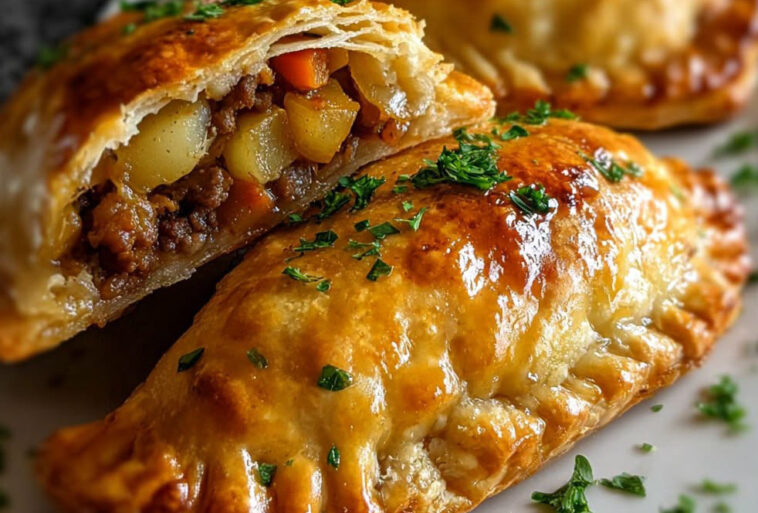
Few comfort foods are as satisfying as a freshly baked pastry pocket filled with tender beef and hearty root vegetables. These Golden Beef & Root Vegetable Pastry Pockets are inspired by the classic Cornish pasty, featuring juicy diced beef, potatoes, rutabaga (swede), sweet onions, and fragrant thyme wrapped inside a buttery, flaky crust. As the pastries bake, the filling slowly steams in its own juices, creating a rich, savoury meal enclosed in crisp, golden pastry.
Perfect for family dinners, packed lunches, picnics, or make-ahead meals, these handheld pastries are both practical and delicious. They freeze beautifully, reheat well, and deliver a complete meal in every bite.
Why You’ll Love These Savoury Pastry Pockets
- Crispy, buttery pastry with a golden finish
- Tender beef and vegetables cooked together inside the pastry
- Easy to prepare ahead of time
- Great for meal prep and freezer storage
- Traditional comfort food with timeless flavour
- Perfect for lunches, dinners, road trips, and picnics
Ingredients
For the Filling
- 1 pound (450 g) beef skirt steak or beef chuck, finely diced
- 2 medium potatoes, peeled and finely diced
- 1 medium rutabaga (swede), peeled and finely diced
- 1 medium onion, finely chopped
- 1 teaspoon salt
- ½ teaspoon freshly ground black pepper
- ½ teaspoon dried thyme
For the Pastry
- 2 sheets refrigerated shortcrust pastry or homemade pastry dough
- 2 tablespoons butter, cut into small cubes
- 1 egg, beaten (for egg wash)
- 2 tablespoons all-purpose flour (for rolling)
Equipment Needed
- Large mixing bowl
- Sharp knife
- Rolling pin
- Baking tray
- Parchment paper
- Pastry brush
- Fork for crimping
Choosing the Best Beef
Traditionally, Cornish-style pasties are made with inexpensive cuts of beef that become wonderfully tender while baking.
Excellent choices include:
- Beef skirt steak
- Beef chuck
- Blade steak
- Stewing beef
Dice the meat into small cubes rather than using minced beef. Cubed beef retains more texture and develops richer flavour during cooking.
Why Rutabaga (Swede) Matters
Rutabaga is one of the defining ingredients in traditional pasties.
It contributes:
- Mild earthy sweetness
- Creamy texture after baking
- Extra moisture
- Balanced flavour alongside the beef
If rutabaga is unavailable, you may substitute:
- Turnip
- Parsnip
- Extra potatoes (although the flavour will differ)
Step-by-Step Instructions
Step 1: Prepare the Oven
Preheat your oven to 400°F (200°C).
Line a baking tray with parchment paper to prevent sticking and make cleanup easier.
Step 2: Prepare the Filling
In a large bowl combine:
- diced beef
- potatoes
- rutabaga
- onion
Sprinkle over:
- salt
- pepper
- thyme
Mix thoroughly so every ingredient is evenly coated with seasoning.
Unlike many meat fillings, this mixture is assembled completely raw. Everything cooks together inside the pastry, allowing the meat juices to flavour the vegetables.
Step 3: Roll the Pastry
Dust your work surface lightly with flour.
Roll the pastry until approximately ⅛-inch (3 mm) thick.
Using a dinner plate or large bowl as a guide, cut four circles measuring approximately 8–9 inches across.
Step 4: Fill Each Pastry
Place one quarter of the filling onto one half of each pastry circle.
Leave about a 1-inch border around the edges.
Top each mound of filling with several small cubes of butter.
The butter melts into the filling while baking, adding richness and helping create a delicious natural gravy.
Step 5: Fold and Seal
Fold the pastry over to form a half-moon shape.
Press the edges firmly together.
Crimp the edges using:
- your fingers
- or a fork
A tight seal keeps the juices inside throughout baking.
Step 6: Vent the Pastries
Cut one small slit in the top of each pastry.
This allows steam to escape, preventing the pastry from bursting during baking.
Step 7: Apply the Egg Wash
Brush the tops and crimped edges generously with beaten egg.
The egg wash creates a beautifully glossy golden crust.
Step 8: Bake
Bake for 35–45 minutes until:
- pastry is deep golden brown
- filling is bubbling
- beef is tender
- vegetables are fully cooked
Cooking time varies slightly depending on the size of the diced vegetables.
Step 9: Cool Before Serving
Allow the pastries to cool for 10–15 minutes.
The filling will be extremely hot immediately after baking.
Cooling also allows the natural juices to settle inside the pastry.
Expert Tips for Perfect Pastry Pockets
Dice Everything Evenly
Small, consistent cubes ensure the filling cooks evenly.
Don’t Overfill
Overfilled pastries can split during baking.
Leave enough room to seal the edges securely.
Keep the Pastry Cold
Cold pastry is easier to handle and bakes into flakier layers.
If it softens while working, chill it for 10 minutes.
Seal Well
Press firmly around the edges before crimping.
Proper sealing keeps the delicious meat juices inside.
Vent Every Pasty
Even a tiny steam hole prevents pressure from building inside the pastry.
Delicious Variations
Cheddar Beef Pasties
Add:
- ½ cup grated mature cheddar cheese
The cheese melts into the filling for extra richness.
Garlic Herb Version
Mix in:
- 2 minced garlic cloves
- fresh parsley
- rosemary
Spicy Beef Pasties
Add:
- smoked paprika
- cayenne pepper
- crushed chilli flakes
Mushroom Beef Pasties
Include finely diced mushrooms for additional moisture and savoury flavour.
Rustic Steak & Ale Version
Replace a small portion of the butter with a spoonful of thick beef-and-ale gravy.
What to Serve With These Pasties
These hearty pastries pair wonderfully with:
- Garden salad
- Pickled onions
- Coleslaw
- Roasted vegetables
- Baked beans
- Brown gravy
- Tomato chutney
- English mustard
Storage
Store cooled pastries in an airtight container.
Refrigerate for up to 4 days.
Freezing Instructions
These pastries freeze exceptionally well.
Before Baking
Assemble the pastries.
Freeze individually on a tray before transferring to freezer bags.
Bake directly from frozen, adding approximately 15–20 minutes to the baking time.
After Baking
Allow to cool completely.
Wrap individually and freeze for up to 3 months.
Reheating
Oven (Recommended)
Bake at 350°F (175°C) for 15–20 minutes until hot throughout.
Air Fryer
Heat at 350°F for 8–10 minutes.
Microwave
Heat for 2–3 minutes, although the pastry will be softer than when oven reheated.
Nutritional Information (Approximate Per Serving)
- Calories: 680 kcal
- Protein: 35 g
- Carbohydrates: 42 g
- Fat: 40 g
- Saturated Fat: 16 g
- Fibre: 5 g
- Sodium: 640 mg
Frequently Asked Questions
Can I use puff pastry?
Yes. Puff pastry creates a lighter, flakier crust, although traditional pasties are usually made with shortcrust pastry.
Why is the filling added raw?
Cooking the ingredients inside the pastry allows the vegetables to absorb the meat juices, producing the classic flavour and texture of a traditional pasty.
Can I make these ahead of time?
Absolutely. Assemble the pastries up to 24 hours in advance and refrigerate until ready to bake.
Can I freeze them?
Yes. Freeze either before or after baking for convenient future meals.
What cut of beef works best?
Beef chuck and skirt steak are ideal because they become tender and flavourful during baking.
Final Thoughts
These Golden Beef & Root Vegetable Pastry Pockets are the perfect example of classic comfort food done right. With flaky, buttery pastry surrounding a wholesome filling of tender beef, potatoes, rutabaga, onions, and fragrant herbs, every bite delivers rich, savoury flavour and satisfying texture. Whether served fresh from the oven for dinner, packed for lunch, or frozen for busy weeknights, these homemade pasties remain a timeless favourite that never goes out of style.
