
 Alexa Bernier
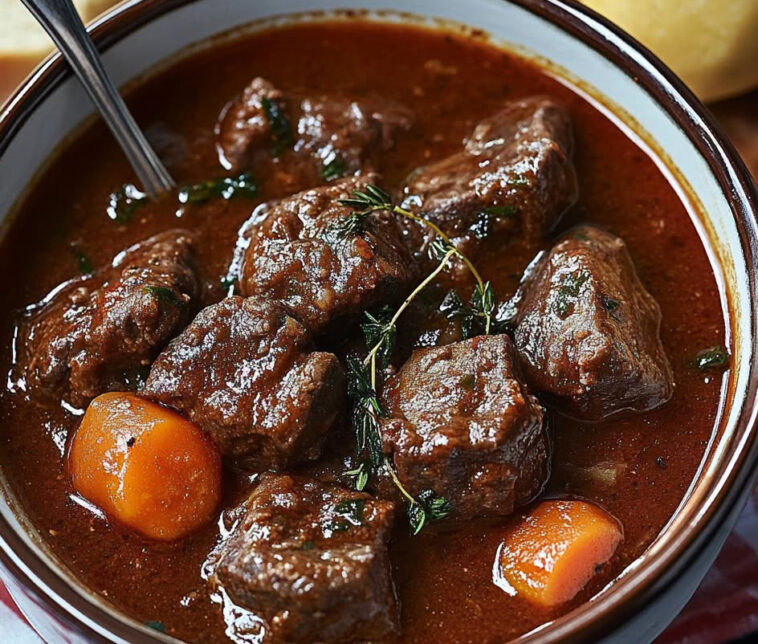
There is nothing quite like a steaming bowl of homemade beef stew on a chilly evening. This Hearty Rustic Beef Stew with Tender Vegetables and Rich Herb Gravy is the kind of comforting meal that fills the kitchen with an irresistible aroma and brings everyone to the table.
Chunks of well-browned beef chuck are slowly simmered with onions, carrots, celery, and Yukon Gold potatoes in a deeply savory broth enriched with tomatoes, Worcestershire sauce, garlic, and fragrant herbs. The result is a thick, flavorful gravy surrounding tender pieces of beef and hearty vegetables.
This classic-style beef stew is simple enough for a cozy family dinner but satisfying enough to serve when you have guests. Best of all, most of the cooking happens in one Dutch oven, making cleanup relatively easy.
Why You’ll Love This Rustic Beef Stew
This recipe has everything you want from a traditional beef stew: tender meat, hearty vegetables, a rich sauce, and layers of comforting flavor.
Here are a few reasons to add it to your dinner rotation:
- Tender, flavorful beef: Beef chuck becomes incredibly tender during slow simmering.
- Rich homemade gravy: Flour, beef broth, tomatoes, and browned bits create a deliciously thick sauce.
- Plenty of vegetables: Carrots, celery, potatoes, onions, and peas make this a satisfying one-pot meal.
- Deep savory flavor: Garlic, Worcestershire sauce, thyme, rosemary, and tomato paste add complexity.
- Perfect for leftovers: The flavors become even better after resting overnight.
- One-pot convenience: Everything comes together in a Dutch oven.
Ingredients You’ll Need
Beef
2 pounds beef chuck roast, cut into 1½-inch cubes
Beef chuck is an excellent choice for stew because it contains enough connective tissue and marbling to become tender and succulent during slow cooking. Cut the beef into reasonably uniform pieces so they cook evenly.
Olive Oil
2 tablespoons olive oil
Use the oil for searing the beef and sautéing the vegetables. The initial browning is an important step because it develops the deep savory flavors that make the finished stew so delicious.
Onion and Garlic
1 medium yellow onion, diced
3 cloves garlic, minced
Onion provides sweetness and body, while garlic adds a warm savory note.
Vegetables
3 carrots, peeled and cut into chunks
3 celery stalks, sliced
1½ pounds Yukon Gold potatoes, cut into chunks
These vegetables make the stew hearty and filling. Yukon Gold potatoes are especially useful because they have a naturally buttery texture and generally hold their shape well during simmering.
Flour
2 tablespoons all-purpose flour
Flour helps thicken the cooking liquid into a rich, spoon-coating gravy.
Broth and Tomatoes
3 cups beef broth
1 cup crushed tomatoes
2 teaspoons tomato paste
The combination of beef broth and tomatoes creates a balanced base that is savory, slightly tangy, and rich.
Seasonings
1 tablespoon Worcestershire sauce
1 teaspoon dried thyme
1 teaspoon dried rosemary
2 bay leaves
1 teaspoon salt
½ teaspoon black pepper
These seasonings complement the beef without overwhelming the natural flavor of the ingredients.
Finishing Ingredients
1 cup frozen peas
2 tablespoons fresh parsley, chopped
Frozen peas add a pop of color and a touch of sweetness near the end of cooking. Fresh parsley provides a bright finish that balances the richness of the stew.
How to Make Hearty Rustic Beef Stew
Step 1: Prepare and Season the Beef
Begin by cutting the beef chuck into approximately 1½-inch cubes if it has not already been prepared.
Use paper towels to pat the beef thoroughly dry. This small step makes a big difference when searing because dry meat develops a much better browned crust.
Season the beef generously with salt and black pepper.
Step 2: Brown the Beef
Place a large Dutch oven over medium-high heat and add the olive oil.
Once the oil is hot, add some of the beef cubes in a single layer. Avoid adding all of the meat at once because overcrowding can cause the beef to steam rather than brown.
Sear the beef for approximately 2 to 3 minutes per side, turning as necessary, until the exterior is deeply browned.
Transfer the browned beef to a clean plate and continue with the remaining beef.
Don’t worry if browned bits remain on the bottom of the Dutch oven. Those caramelized pieces are packed with flavor and will become part of the gravy.
Step 3: Cook the Aromatic Vegetables
Add the diced onion and celery to the same Dutch oven.
Cook for about 4 to 5 minutes, stirring occasionally. As the vegetables soften, use your spoon or spatula to scrape up some of the browned bits from the bottom.
This helps build the flavor of the stew from the very beginning.
Step 4: Add Garlic and Tomato Paste
Stir in the minced garlic and tomato paste.
Cook for approximately 1 minute, stirring continuously.
The garlic should become fragrant, while the tomato paste should become incorporated into the vegetables. Avoid cooking the garlic too long at this stage because it can burn and become bitter.
Step 5: Add the Flour
Sprinkle the all-purpose flour evenly over the vegetables.
Stir thoroughly so the flour coats the onions and celery.
Cook for about 1 minute. This helps eliminate the raw flour flavor and prepares it to thicken the cooking liquid.
Step 6: Build the Gravy
Slowly pour the beef broth into the Dutch oven while stirring.
Adding the broth gradually helps prevent lumps and allows the flour to dissolve evenly.
Stir in the crushed tomatoes and Worcestershire sauce.
Then add the dried thyme, dried rosemary, and bay leaves.
At this point, the mixture should already smell rich and savory.
Step 7: Return the Beef to the Pot
Place the browned beef back into the Dutch oven along with any juices that accumulated on the plate.
Those juices contain plenty of flavor, so don’t leave them behind.
Stir everything together and bring the mixture to a gentle simmer.
Step 8: Add the Carrots and Potatoes
Add the chopped carrots and Yukon Gold potatoes.
Stir gently so the vegetables are distributed throughout the stew and coated with the flavorful broth.
Cover the Dutch oven and reduce the heat to low.
Step 9: Slow Simmer Until Tender
Allow the stew to simmer gently for approximately 1½ to 2 hours.
Stir occasionally to make sure nothing is sticking to the bottom.
The exact cooking time can vary depending on the size of the beef pieces and the temperature of your stovetop. The best indicator of doneness is tenderness: the beef should be easy to pierce with a fork and the vegetables should be cooked through.
Avoid boiling the stew aggressively. A gentle simmer is ideal for producing tender beef and a flavorful gravy.
Step 10: Add the Peas
During the final 5 minutes of cooking, stir in the frozen peas.
Because frozen peas are already tender, they don’t need much time to cook. Adding them near the end helps them retain their color, texture, and fresh flavor.
Step 11: Finish and Serve
Remove the bay leaves from the pot.
Taste the stew carefully and adjust the salt and black pepper if necessary.
Sprinkle the finished stew with freshly chopped parsley just before serving.
Ladle the hot stew into bowls and serve immediately with crusty bread, dinner rolls, biscuits, or another favorite side.
Tips for Making the Best Beef Stew
Don’t Skip the Beef Searing
The beef doesn’t need to be cooked through during the initial searing. The purpose is to create a beautifully browned exterior.
That caramelized surface contributes tremendous flavor to the final stew.
Avoid Crowding the Pot
If too much beef is added at once, the temperature of the Dutch oven can drop and the meat may release moisture instead of browning.
Sear the beef in batches if necessary.
Cut the Vegetables Into Similar-Sized Pieces
Try to cut the carrots and potatoes into relatively similar chunks.
Very small pieces can become overly soft before the beef is tender, while extremely large pieces may take longer to cook.
Keep the Heat Low
Once the stew reaches a gentle simmer, reduce the heat.
Slow cooking allows the beef’s connective tissue to gradually soften, producing the tender texture associated with a good homemade stew.
Taste Before Serving
Broth, Worcestershire sauce, and tomatoes all contribute salt and flavor, so it’s best to taste the stew near the end before adding additional seasoning.
What Is the Best Beef for Stew?
Beef chuck roast is one of the best choices for homemade stew.
Unlike very lean cuts, chuck contains connective tissue and fat that gradually break down during slow cooking. This helps produce beef that becomes tender while contributing richness to the broth.
Other cuts can work, but chuck roast is particularly dependable for a classic, slow-simmered stew.
Can I Make This Beef Stew Ahead of Time?
Absolutely.
In fact, beef stew can taste even better after it has had time to rest.
Prepare the stew according to the recipe, allow it to cool appropriately, and refrigerate it in a covered container. When you’re ready to serve it, gently reheat it on the stovetop until hot.
If the gravy becomes very thick after refrigeration, add a small amount of beef broth or water while reheating.
How to Store Leftover Beef Stew
Allow leftovers to cool appropriately before transferring them to an airtight container.
Store the stew in the refrigerator and reheat individual portions as needed.
For longer storage, the stew can also be frozen in freezer-safe containers. Leave a little room at the top of the container because liquids expand when frozen.
Thaw refrigerated or use an appropriate safe thawing method before reheating.
What to Serve With Beef Stew
This stew is hearty enough to serve on its own, but the right side dish can make the meal even more enjoyable.
Try serving it with:
- Crusty French bread
- Homemade dinner rolls
- Garlic bread
- Buttermilk biscuits
- Simple green salad
- Roasted vegetables
- Steamed green beans
- Buttered bread
- Mashed potatoes
A piece of crusty bread is especially useful for soaking up every bit of the rich herb gravy.
Easy Variations
Although this recipe is delicious as written, there are several ways to customize it.
Add Mushrooms
Sliced mushrooms can add another layer of earthy flavor. Brown them separately or add them with the other vegetables.
Use Different Potatoes
Yukon Gold potatoes provide a creamy, buttery texture, but other sturdy potato varieties can also be used.
Add More Herbs
Fresh parsley is used as a garnish here, but fresh thyme or rosemary can also be added toward the end for a stronger herbal flavor.
Make It Extra Hearty
You can increase the amount of carrots, celery, or potatoes if you want the stew to contain even more vegetables.
Add a Little Heat
For a slightly spicy variation, a small pinch of red pepper flakes can be added with the herbs.
Frequently Asked Questions
Can I use stew meat instead of chuck roast?
Yes. Pre-cut beef stew meat can be convenient, although the pieces may vary in size. If possible, choose pieces that are relatively uniform so they cook at the same rate.
Why is my beef still tough?
Beef stew meat can remain tough if it has not cooked long enough. Continue simmering gently until the beef becomes fork-tender.
Avoid increasing the heat dramatically. Low and slow cooking is generally the better approach.
Why isn’t my stew thick enough?
The gravy should naturally thicken from the flour and reduction during cooking. If your stew is still thinner than desired, allow it to simmer uncovered for a short time while stirring occasionally.
Can I use fresh peas?
Yes. Fresh peas can be used instead of frozen peas. Add them near the end of cooking so they don’t become overly soft.
Can I make this in a slow cooker?
The recipe can be adapted for a slow cooker. For the best flavor, brown the beef and sauté the aromatics first, then transfer the ingredients to the slow cooker and cook until the beef is tender.
Can I make this gluten-free?
To make the stew gluten-free, use a gluten-free flour alternative suitable for thickening and verify that the beef broth and Worcestershire sauce you use are gluten-free.
Can I use red potatoes?
Yes. Red potatoes are another good option because they tend to hold their shape well during longer cooking.
Recipe at a Glance
Recipe: Hearty Rustic Beef Stew with Tender Vegetables and Rich Herb Gravy
Prep Time: 25 minutes
Cooking Time: About 2 hours
Total Time: About 2 hours 25 minutes
Servings: 6
Calories: Approximately 485 kcal per serving
Ingredients
- 2 pounds beef chuck roast, cut into 1½-inch cubes
- 2 tablespoons olive oil
- 1 medium yellow onion, diced
- 3 cloves garlic, minced
- 3 carrots, peeled and cut into chunks
- 3 celery stalks, sliced
- 1½ pounds Yukon Gold potatoes, cut into chunks
- 2 tablespoons all-purpose flour
- 3 cups beef broth
- 1 cup crushed tomatoes
- 1 tablespoon Worcestershire sauce
- 2 teaspoons tomato paste
- 1 teaspoon dried thyme
- 1 teaspoon dried rosemary
- 2 bay leaves
- 1 teaspoon salt
- ½ teaspoon black pepper
- 1 cup frozen peas
- 2 tablespoons fresh parsley, chopped
Directions
- Pat the beef dry and season with salt and black pepper.
- Heat olive oil in a large Dutch oven over medium-high heat.
- Brown the beef in batches for 2 to 3 minutes per side. Transfer to a plate.
- Add onion and celery and cook for 4 to 5 minutes.
- Add garlic and tomato paste and cook for 1 minute.
- Sprinkle in the flour and stir for another minute.
- Gradually add beef broth while stirring.
- Add crushed tomatoes, Worcestershire sauce, thyme, rosemary, and bay leaves.
- Return the browned beef and accumulated juices to the pot.
- Add carrots and potatoes.
- Cover and simmer gently over low heat for 1½ to 2 hours.
- Stir in frozen peas during the final 5 minutes.
- Remove the bay leaves and adjust seasoning.
- Garnish with fresh parsley and serve hot.
Final Thoughts
This Hearty Rustic Beef Stew with Tender Vegetables and Rich Herb Gravy is the definition of comforting homemade food. The combination of deeply browned beef, tender potatoes and carrots, aromatic herbs, and rich tomato-infused gravy creates a meal that feels both rustic and special.
It is a wonderful recipe for Sunday dinner, cold-weather evenings, family gatherings, or any time you want a satisfying meal made from simple ingredients.
Serve it with warm crusty bread, spoon the rich gravy over every bite, and enjoy a classic bowl of comfort food that is sure to become a family favorite.
