
 Alexa Bernier
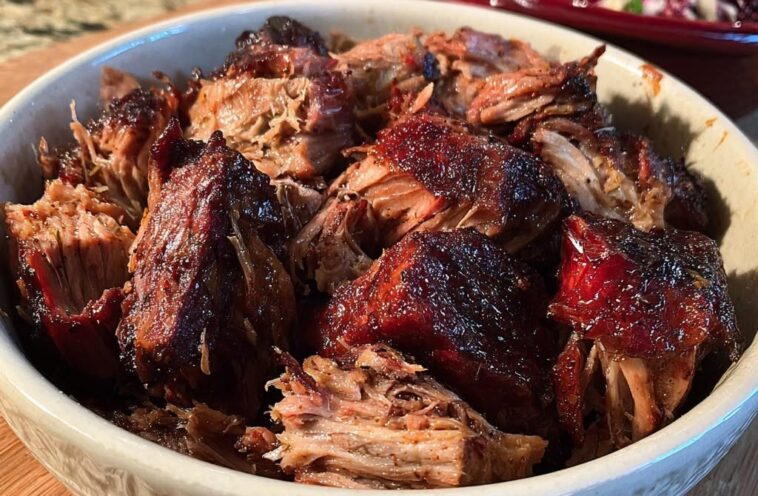
Few barbecue dishes are as satisfying and crowd-pleasing as a perfectly smoked pulled pork shoulder. Slow-cooked over fragrant hickory smoke and coated in a rich blend of spices, this classic barbecue favorite delivers incredible flavor, tender texture, and juicy meat that practically falls apart on its own. Whether you’re preparing a backyard feast, a family gathering, or a game-day meal, this smoked pork shoulder recipe is guaranteed to impress.
The secret to exceptional pulled pork lies in patience. A generous dry rub, an overnight rest in the refrigerator, and a long, slow smoking process allow the flavors to penetrate deep into the meat. The result is a beautifully barked exterior surrounding succulent pork that shreds effortlessly and bursts with smoky, savory goodness.
Why You’ll Love This Recipe
This recipe combines sweet, smoky, and savory flavors in perfect balance. Brown sugar helps create a flavorful crust, smoked paprika adds depth, while garlic, onion, cumin, and chili powder provide layers of complexity. The mustard coating acts as a binder for the seasoning and helps develop an attractive bark during smoking.
Using hickory or applewood creates a rich smoke flavor that complements the natural richness of pork shoulder. Periodic spritzing with apple juice and apple cider vinegar keeps the meat moist throughout the cooking process while enhancing its flavor profile.
Ingredients
For the Pork
- 8–10 pound bone-in pork shoulder (Boston butt)
- 2 tablespoons yellow mustard
For the Signature Dry Rub
- 1/4 cup brown sugar
- 2 tablespoons smoked paprika
- 1 tablespoon kosher salt
- 1 tablespoon coarse black pepper
- 2 teaspoons garlic powder
- 2 teaspoons onion powder
- 2 teaspoons chili powder
- 1 teaspoon cayenne pepper (optional for extra heat)
- 1 teaspoon ground cumin
- 1 teaspoon dried oregano
For Spritzing
- 1/2 cup apple juice
- 1/4 cup apple cider vinegar
Additional Items
- Hickory or applewood chunks, chips, or pellets
- Barbecue sauce for serving (optional)
Step 1: Prepare the Pork Shoulder
Begin by trimming away any excess fat from the pork shoulder, leaving approximately one-quarter inch of the fat cap intact. This thin layer of fat will help keep the meat moist while smoking without preventing the seasoning from penetrating the surface.
Pat the pork shoulder dry using paper towels. Drying the surface helps the mustard and seasoning adhere more effectively.
Next, spread a thin layer of yellow mustard over the entire exterior of the pork. Don’t worry—the mustard flavor will not be noticeable in the finished product. Its primary purpose is to help the seasoning stick while contributing to the formation of a flavorful bark.
Step 2: Make the Dry Rub
In a medium mixing bowl, combine the brown sugar, smoked paprika, kosher salt, black pepper, garlic powder, onion powder, chili powder, cayenne pepper, ground cumin, and dried oregano.
Mix thoroughly until all ingredients are evenly distributed. This blend creates a balanced combination of sweetness, smokiness, mild heat, and savory flavor that perfectly complements the pork.
Generously coat every surface of the pork shoulder with the dry rub. Press the seasoning into the meat to ensure maximum coverage.
Step 3: Refrigerate Overnight
Place the seasoned pork shoulder in a large container, roasting pan, or wrap it tightly with plastic wrap. Refrigerate for at least eight hours, though overnight is highly recommended.
This resting period allows the seasonings to penetrate the meat and helps develop deeper flavor throughout the pork.
Step 4: Prepare the Smoker
When ready to cook, preheat your smoker to 225°F (107°C). Add hickory wood for a bold, traditional barbecue flavor or applewood for a slightly sweeter, milder smoke profile.
Maintaining a consistent temperature throughout the cook is essential for achieving tender, juicy pulled pork.
Step 5: Smoke the Pork
Place the pork shoulder directly on the smoker grate with the fat cap facing upward. As the fat slowly renders, it helps baste the meat naturally throughout the smoking process.
Allow the pork to smoke low and slow for approximately 8 to 10 hours. After the first three hours, begin spritzing the meat once every hour with a mixture of apple juice and apple cider vinegar. This helps maintain moisture, encourages bark development, and adds subtle sweetness and tang.
During this stage, the pork will gradually absorb smoke while developing a rich, mahogany-colored crust.
Step 6: Wrap During the Stall
As the pork cooks, it will eventually reach an internal temperature of around 165°F. At this point, the meat often enters what pitmasters call “the stall,” where the temperature stops rising for several hours due to evaporative cooling.
To help push through this phase, remove the pork from the smoker and wrap it tightly in either butcher paper or aluminum foil.
Wrapping helps retain moisture, speeds up cooking, and preserves tenderness while still allowing the bark to remain flavorful.
Step 7: Finish Cooking
Return the wrapped pork shoulder to the smoker and continue cooking until the internal temperature reaches approximately 203°F.
Rather than relying solely on temperature, test for tenderness by inserting a temperature probe or skewer into various parts of the meat. It should slide in with little resistance, similar to inserting it into softened butter.
This indicates that the connective tissues and collagen have fully broken down, resulting in perfectly tender pulled pork.
Step 8: Rest Before Shredding
Once fully cooked, remove the pork shoulder from the smoker and leave it wrapped. Allow it to rest for at least one hour.
Resting is a crucial step because it allows the juices to redistribute throughout the meat, ensuring every bite remains moist and flavorful.
Skipping this stage can result in dry pulled pork, as the juices will escape when the meat is shredded.
Step 9: Pull and Serve
After resting, unwrap the pork shoulder and transfer it to a large tray or pan. Remove the bone, which should slide out cleanly if the pork is properly cooked.
Using two forks or meat claws, shred the pork into bite-sized pieces. Mix the accumulated juices back into the meat for maximum flavor and moisture.
Serve the pulled pork on sandwich buns, alongside classic barbecue sides, in tacos, on baked potatoes, or simply on its own. Add your favorite barbecue sauce if desired, though the smoky flavor is often delicious enough to stand alone.
Serving Suggestions
This smoked pulled pork pairs beautifully with:
- Coleslaw
- Baked beans
- Cornbread
- Macaroni and cheese
- Potato salad
- Pickles
- Grilled corn on the cob
It’s also excellent for meal prep, as leftovers can be stored and enjoyed throughout the week.
Recipe Information
Preparation Time: 20 minutes (plus overnight marinating)
Smoking Time: Approximately 12 hours
Total Time: About 20 hours
Yield: 12 servings
Calories: Approximately 495 calories per serving
With its rich smoky aroma, flavorful bark, and melt-in-your-mouth texture, this Hickory-Smoked Pulled Pork Shoulder is a true barbecue masterpiece. Take your time, trust the process, and you’ll be rewarded with restaurant-quality pulled pork that’s perfect for any occasion.
