
 Alexa Bernier
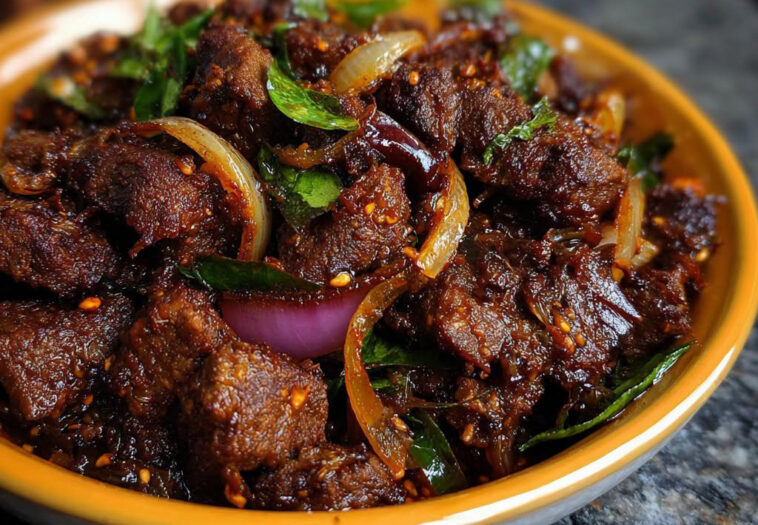
Kerala-Style Beef Ularthiyathu is a bold and flavorful South Indian dish made by slowly roasting tender pieces of beef with caramelized onions, coconut oil, fresh curry leaves, aromatic spices, green chilies, and toasted coconut. The name Ularthiyathu refers to the traditional Kerala cooking technique of sautéing or roasting the meat until the moisture disappears and the beef becomes deeply coated with spices.
This dish is especially loved for its rich combination of savory, spicy, earthy, and slightly sweet flavors. As the beef cooks down with the onions and spices, it develops a beautifully dark color and a roasted exterior while remaining tender inside. Fresh coconut slices add another layer of texture and a subtle sweetness that balances the heat from the chilies and spices.
Although Beef Ularthiyathu is often served at festive meals and family gatherings, it is also easy enough to prepare for a comforting weekend dinner. Serve it with fluffy rice, Kerala parotta, chapati, appam, or another favorite Indian side dish for a satisfying meal.
Why You’ll Love This Kerala Beef Ularthiyathu
There are plenty of reasons to add this traditional Kerala-style beef recipe to your cooking collection.
First, the flavor is incredibly rich. Coconut oil, curry leaves, mustard seeds, fennel, black pepper, coriander, garam masala, and chili powder create a fragrant spice mixture that coats every piece of beef.
The caramelized onions are another important part of the recipe. Cooking them slowly allows their natural sweetness to develop, which works beautifully with the savory beef and warming spices.
Fresh coconut slices also make this dish distinctive. They become lightly toasted as they cook with the beef, adding a pleasant bite and a delicious roasted coconut flavor.
Most importantly, Beef Ularthiyathu is a wonderfully versatile dish. It can be served as part of a large Kerala-inspired feast or simply paired with rice and a vegetable side for an everyday meal.
Ingredients
For Cooking the Beef
- 1 kg beef, cut into bite-sized pieces
- 1 tablespoon fresh ginger, finely chopped
- 1 tablespoon fresh garlic, finely chopped
- 1 teaspoon turmeric powder
- 1 teaspoon black pepper powder
- 1½ teaspoons salt
- 1½ cups water
For the Ularthiyathu Masala
- 2 tablespoons coconut oil
- 1 teaspoon mustard seeds
- 2 sprigs fresh curry leaves
- 2 medium onions, thinly sliced
- 2 green chilies, slit lengthwise
- 1 tablespoon fresh ginger, finely chopped
- 1 tablespoon fresh garlic, finely chopped
- 1 teaspoon fennel seeds
- 1 teaspoon black pepper powder
- 1½ teaspoons coriander powder
- ½ teaspoon turmeric powder
- 1 teaspoon garam masala
- ½ teaspoon chili powder
- ½ cup fresh coconut slices
- Salt, to taste
How to Make Kerala-Style Beef Ularthiyathu
1. Season the Beef
Begin by placing the bite-sized beef pieces in a large bowl. Add the chopped ginger, chopped garlic, turmeric powder, black pepper powder, and salt.
Mix everything thoroughly until the seasonings are distributed evenly throughout the meat. Allowing the beef to sit for a few minutes while you prepare the other ingredients gives the spices a chance to begin flavoring the meat.
2. Cook the Beef Until Tender
Transfer the seasoned beef to a pressure cooker or heavy-bottomed cooking pot. Pour in approximately 1½ cups of water and cook until the meat becomes tender.
If using a pressure cooker, cook the beef for approximately 15–20 minutes after pressure is reached, depending on the cut and tenderness of the meat.
If using a heavy pot, cover and simmer gently until the beef is tender. Add a little more water if necessary during cooking.
Once the beef is cooked, do not discard all of the cooking liquid. Reserve some of it because a small amount can be added later while roasting the beef with the masala.
3. Heat the Coconut Oil
Place a large, heavy skillet or wide pan over medium heat. Add the coconut oil and allow it to heat gently.
Coconut oil is especially important in this Kerala-style recipe because it contributes a characteristic aroma and flavor. It also works beautifully with curry leaves, toasted coconut, and the warm spices used in the dish.
4. Temper the Mustard Seeds and Curry Leaves
Add the mustard seeds to the hot coconut oil. Let them splutter for a few seconds.
Immediately add the fresh curry leaves. They will sizzle in the oil and release their distinctive fragrance.
Be careful when adding curry leaves to hot oil because they can cause the oil to splatter.
5. Caramelize the Onions
Add the thinly sliced onions and slit green chilies to the skillet.
Cook over medium heat, stirring regularly, until the onions soften and gradually turn golden brown. This step is worth taking your time with because properly caramelized onions provide sweetness, depth, and color to the finished dish.
Avoid cooking the onions over excessively high heat. You want them deeply golden and soft rather than burnt.
6. Add Ginger and Garlic
Once the onions have developed a beautiful golden color, add the remaining chopped ginger and garlic.
Sauté for a couple of minutes until the raw aroma disappears and the mixture becomes fragrant.
The combination of caramelized onion, ginger, garlic, curry leaves, and coconut oil should already smell wonderfully aromatic at this stage.
7. Toast the Spices
Add the fennel seeds, black pepper powder, coriander powder, turmeric powder, garam masala, and chili powder.
Stir everything together and cook gently for about 30–60 seconds.
Do not allow the spices to burn. Ground spices can become bitter quickly when exposed to excessive heat. If the pan seems too dry, add a small spoonful of the reserved beef cooking liquid.
8. Add the Cooked Beef
Add the tender cooked beef to the skillet and toss thoroughly so that each piece becomes coated with the onion and spice mixture.
The beef may still contain some moisture, so continue cooking uncovered over medium heat.
If the mixture looks excessively dry before the flavors have combined, add a small amount of the reserved cooking liquid. Avoid adding too much because the goal is to eventually roast the beef rather than create a curry-like sauce.
9. Cook Until the Moisture Evaporates
Continue stirring the beef occasionally as it cooks.
As the remaining liquid evaporates, the masala will begin to cling more tightly to the beef. The onions will become darker, the spices will become more concentrated, and the meat will start developing a roasted appearance.
This slow roasting stage is what gives Beef Ularthiyathu its signature texture and deep flavor.
10. Add the Fresh Coconut
Add the fresh coconut slices and mix them thoroughly into the beef.
Continue cooking until the coconut slices become lightly toasted and the beef develops a rich, dark coating.
The coconut should have enough time to absorb some of the spicy, savory flavors from the pan while developing slightly crisp edges.
11. Roast Until Deeply Caramelized
Keep sautéing the beef for several more minutes, stirring occasionally to prevent sticking or burning.
The finished dish should be relatively dry rather than saucy. The beef should be tender and deeply coated with the roasted onion and spice mixture, with some pieces developing slightly crisp edges.
Taste the dish and adjust the salt, black pepper, or chili powder according to your preference.
Once the beef reaches the desired color and texture, remove the pan from the heat.
Tips for Making the Best Beef Ularthiyathu
Choose the Right Cut of Beef
For this recipe, beef cuts that become tender with longer cooking work particularly well. Since the beef is cooked until tender before being roasted with the masala, the final texture should be juicy and soft rather than tough.
Don’t Rush the Onions
The onions are one of the foundations of the dish. Allow them to become properly golden before adding the spices. Their natural sweetness adds balance to the pepper, chili, and other warming spices.
Use Fresh Curry Leaves
Fresh curry leaves provide an unmistakable aroma. Add them directly to the hot coconut oil so their fragrance can infuse the oil before the onions go into the pan.
Watch the Heat When Toasting Spices
Ground spices can burn easily. Keep the heat moderate and stir continuously for the short spice-toasting stage.
If necessary, add a tiny amount of reserved beef stock to prevent the spices from sticking to the bottom of the skillet.
Allow the Beef to Roast
One of the most important parts of Ularthiyathu is the final roasting stage. Don’t stop cooking as soon as the beef is combined with the masala.
Give the meat enough time to lose excess moisture and become richly coated. This is what creates the characteristic dark, roasted appearance.
Use Coconut Oil for Authentic Flavor
While another cooking oil can be used if necessary, coconut oil gives the recipe a distinctly Kerala-style character. Its flavor complements the curry leaves, coconut slices, onions, and spices particularly well.
How Spicy Is This Recipe?
This Beef Ularthiyathu has a naturally bold and spicy flavor because of the black pepper, green chilies, and chili powder.
You can easily adjust the heat to suit your family. For a milder version, reduce the chili powder and use fewer green chilies. If you enjoy a stronger kick, increase the black pepper or add an additional green chili.
Black pepper is particularly important to the character of this dish, so even when reducing the chili powder, you may want to retain some freshly ground black pepper for its distinctive warmth.
What to Serve with Beef Ularthiyathu
Kerala-style Beef Ularthiyathu pairs beautifully with a variety of Indian breads and rice dishes.
Try serving it with:
- Kerala parotta
- Plain steamed rice
- Ghee rice
- Chapati
- Appam
- Malabar parotta
- Coconut rice
- Puttu
- Naan
- Simple vegetable pulao
For a complete meal, serve the beef alongside a fresh cucumber salad, sautéed vegetables, pickle, papad, or a cooling yogurt-based side dish.
Storage and Reheating
Allow leftover Beef Ularthiyathu to cool before transferring it to an airtight container. Refrigerate promptly and use within a suitable refrigerated storage period for cooked leftovers.
To reheat, warm the beef gently in a skillet over medium-low heat. If the meat appears dry, add a small splash of water and cover briefly to help it warm through.
You can then uncover the pan and sauté the beef for another minute or two to restore some of its roasted texture.
Frequently Asked Questions
Can I make Beef Ularthiyathu without a pressure cooker?
Yes. A pressure cooker simply speeds up the tenderizing process. You can cook the beef in a heavy-bottomed pot with water, covered, until it becomes tender. Cooking time will depend on the cut of beef.
Can I make this recipe less spicy?
Absolutely. Reduce the green chilies and chili powder for a milder version. You can also adjust the amount of black pepper to taste.
Why is my Beef Ularthiyathu watery?
The beef needs to be roasted after it has been cooked until tender. If too much cooking liquid remains, continue cooking uncovered until most of the moisture evaporates before adding or finishing with the coconut.
Can I use frozen coconut?
Fresh coconut slices provide the best texture and flavor, but frozen coconut can be used when fresh coconut is unavailable. Thaw and drain it before adding it to the skillet.
What makes Ularthiyathu different from beef curry?
Beef Ularthiyathu is generally much drier than a traditional beef curry. Instead of being served with a generous amount of gravy, the cooked beef is sautéed and roasted with onions, spices, coconut, and aromatics until the mixture clings to the meat.
Recipe at a Glance
Prep Time: 20 minutes
Cooking Time: 45 minutes
Total Time: 1 hour 5 minutes
Servings: 6
Calories: Approximately 485 kcal per serving
Final Thoughts
Kerala-Style Beef Ularthiyathu is a fantastic example of how simple ingredients can create incredibly deep flavor when cooked patiently. Tender beef is transformed by coconut oil, golden onions, curry leaves, green chilies, fragrant spices, and fresh coconut slices.
The secret is in the final roasting. As the moisture disappears, the masala becomes concentrated and coats the beef, while the onions and coconut develop a beautifully caramelized, roasted flavor.
Whether you’re preparing a special family meal or simply craving a hearty Indian dish, this Kerala-style beef recipe is a delicious choice. Serve it hot with parotta, rice, chapati, or your favorite side dishes, and enjoy a wonderfully aromatic meal inspired by the flavors of Kerala.
