
 Alexa Bernier
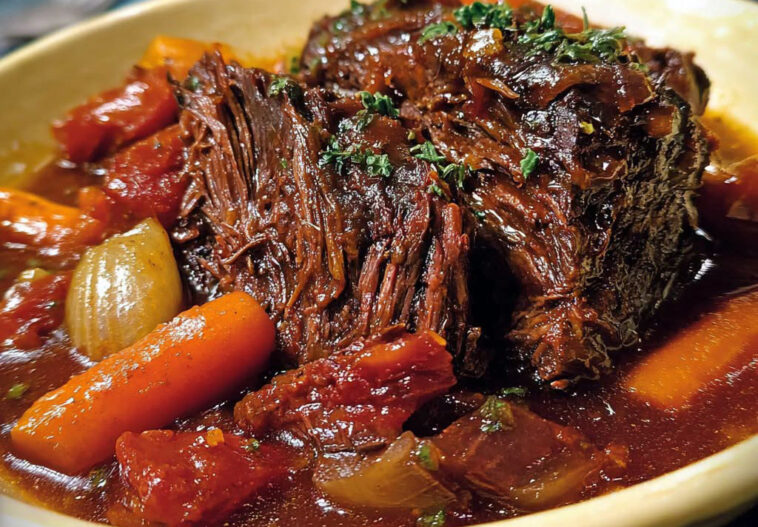
There are few meals more comforting than a beautifully braised beef roast slowly simmered in red wine, tomatoes, aromatic vegetables, and fresh herbs. This Red Wine Braised Beef Roast with Silky Vegetable Gravy turns a humble chuck roast into an incredibly tender, rich, and flavorful dinner that feels special enough for a holiday table but cozy enough for a Sunday family meal.
The secret to this recipe is patience. The beef is first seared until deeply browned, creating a flavorful crust and leaving behind savory caramelized bits in the Dutch oven. The same pot is then used to cook onions, carrots, celery, leeks, and garlic before red wine and brandy are added to deglaze the pan.
As the roast slowly braises in the oven, the vegetables soften and release their natural sweetness while the wine, tomatoes, herbs, and beef combine into a wonderfully rich cooking liquid. Once the beef is tender, part of the vegetable mixture is blended until smooth and returned to the pot. The result is a luxurious, silky gravy with plenty of depth and body.
This is the kind of recipe that fills the kitchen with an irresistible aroma long before dinner is ready. When the roast is finally sliced and covered with that velvety vegetable gravy, every bite is tender, savory, and incredibly satisfying.
Why You’ll Love This Braised Beef Roast
This recipe has everything you want from a comforting slow-cooked beef dinner.
The beef becomes exceptionally tender. Chuck roast contains plenty of connective tissue and marbling, making it ideal for low-and-slow braising. With enough cooking time, the connective tissue breaks down and the meat becomes soft enough to cut with a fork.
The sauce is naturally rich and flavorful. Red wine, tomatoes, chicken stock, roasted vegetables, garlic, and fresh herbs create layers of flavor without requiring a complicated list of ingredients.
The gravy has a silky texture. Instead of leaving all the vegetables chunky, some of them are pureed directly into the braising liquid. This gives the sauce a smooth consistency while keeping all of the flavor from the cooked vegetables.
Everything happens in one Dutch oven. The beef is browned, vegetables are cooked, wine is reduced, and the roast is braised in the same pot. This not only makes cleanup easier but also builds flavor at every stage.
It is ideal for entertaining. Most of the cooking time is hands-off, making this an excellent choice when you want an impressive meal without having to spend the entire day standing over the stove.
Ingredients
For the Beef
- 1 boneless beef chuck roast, approximately 4–5 pounds, tied
- Kosher salt, to taste
- Freshly ground black pepper, to taste
- All-purpose flour, for dredging
- 4 tablespoons olive oil, divided
For the Vegetable Base
- 4 carrots, chopped
- 2 yellow onions, chopped
- 4 celery stalks, chopped
- 2–4 leeks, white and light green parts only, chopped
- 5 large garlic cloves, crushed
For the Braising Liquid
- 2 cups red wine
- 2 tablespoons brandy or Cognac
- 1 can (28 ounces) whole plum tomatoes with their puree
- 1 cup chicken stock
- 1 chicken bouillon cube
- 3 sprigs fresh thyme
- 2 sprigs fresh rosemary
- Salt and freshly ground black pepper, as needed
For the Silky Gravy
- 1 tablespoon unsalted butter, softened
- 2 tablespoons all-purpose flour
How to Make Red Wine Braised Beef Roast
Step 1: Preheat the Oven
Begin by preheating your oven to 325°F (160°C).
Because this recipe eventually moves to a lower oven temperature, it is helpful to have the oven fully heated before you begin cooking the roast.
A heavy Dutch oven with a tight-fitting lid works particularly well for this recipe. Cast iron or another heavy oven-safe pot helps maintain an even temperature during the long braising process.
Step 2: Prepare the Chuck Roast
Remove the beef roast from its packaging and pat it thoroughly dry with paper towels.
This step may seem small, but drying the surface of the meat is important. A dry surface browns much better than a wet one. If the roast is damp, it may steam rather than develop the deeply browned exterior that gives braised beef so much flavor.
Season the roast generously on all sides with kosher salt and freshly ground black pepper.
Place some all-purpose flour in a shallow dish and roll the roast through the flour, coating all sides lightly. Shake off any excess flour.
The flour helps encourage browning and will also contribute a little body to the final sauce.
Step 3: Brown the Beef
Place a large Dutch oven over medium heat and add 2 tablespoons of olive oil.
When the oil is hot, carefully place the floured beef roast into the pot.
Sear the beef without constantly moving it. Allow it to develop a deep brown crust before turning it.
Cook the larger sides for approximately 5–8 minutes per side, then brown the ends for approximately 4–5 minutes.
The goal is not to cook the beef through at this stage. You are building a flavorful browned exterior.
Once every side is deeply browned, transfer the roast to a large plate.
Do not wipe out the Dutch oven. Those browned bits on the bottom are extremely valuable because they will become part of the sauce.
Step 4: Cook the Aromatic Vegetables
Add the remaining 2 tablespoons of olive oil to the Dutch oven.
Add the chopped carrots, onions, celery, leeks, and crushed garlic.
Season the vegetables with a little salt and black pepper.
Cook over medium heat for approximately 10–15 minutes, stirring occasionally.
The vegetables should soften and become fragrant. Try not to brown them too aggressively. You want them tender and aromatic so they can eventually melt into the braising sauce.
The leeks add a gentle sweetness, while the onions, carrots, celery, and garlic create a classic savory foundation.
Step 5: Deglaze the Dutch Oven
Once the vegetables have softened, carefully pour in the 2 cups of red wine.
Add the 2 tablespoons of brandy or Cognac.
The liquid will release the flavorful browned pieces stuck to the bottom of the pot. Use a wooden spoon or spatula to scrape the bottom as the wine heats.
Bring the mixture to a boil and allow it to simmer briefly.
This step is important because those browned bits contain concentrated flavor from the beef and vegetables.
The red wine also adds acidity and complexity to the sauce, balancing the richness of the chuck roast.
Step 6: Add the Tomatoes and Stock
Pour in the whole plum tomatoes along with all of their puree.
Add the chicken stock and chicken bouillon cube.
Season with additional salt and freshly ground black pepper, keeping in mind that the bouillon cube will also contribute salt.
Stir everything together.
At this point, the pot should contain a fragrant combination of wine, tomatoes, vegetables, stock, and seasonings.
Step 7: Add the Fresh Herbs
Place the fresh thyme and rosemary together and tie them securely with kitchen string.
This creates an herb bundle that can easily be removed later.
Add the bundle to the Dutch oven.
Fresh thyme provides an earthy, slightly floral flavor, while rosemary adds a more pronounced herbal character that works beautifully with beef.
If you prefer, you can also place the herbs in a small piece of cheesecloth and tie it closed.
Step 8: Return the Beef to the Pot
Carefully return the browned chuck roast to the Dutch oven.
The roast should sit partially surrounded by the flavorful vegetable and tomato mixture.
Bring the liquid to a gentle boil.
Once it reaches a boil, cover the Dutch oven tightly with its lid.
The lid is important because it traps steam inside the pot, preventing the braising liquid from evaporating too quickly and helping keep the beef moist throughout the cooking process.
Step 9: Begin the Braise
Transfer the covered Dutch oven to the preheated 325°F (160°C) oven.
Cook for approximately 1 hour.
After the first hour, carefully remove the pot from the oven and reduce the oven temperature to 250°F (120°C).
Return the covered Dutch oven to the oven and continue cooking for approximately 1½ hours.
The exact cooking time can vary depending on the size and shape of your roast.
Rather than relying solely on the clock, check the beef for tenderness. A properly braised chuck roast should be extremely tender and easy to pierce with a fork.
If it still feels firm, give it more time. Toughness during braising often means the meat simply needs additional cooking rather than less.
How to Know When the Beef Is Done
The most important test is tenderness.
Insert a fork into the thickest part of the roast. It should slide into the meat easily, and the beef should feel soft rather than resistant.
If you have an instant-read thermometer, you can use it as an additional reference, but tenderness is particularly important for a braised chuck roast.
The meat should not be judged in the same way as a quickly cooked steak. Chuck roast contains connective tissue that needs time to break down.
When properly braised, the connective tissue transforms into gelatin, giving the beef its tender texture and contributing body and richness to the sauce.
Step 10: Rest the Beef
When the roast is fork-tender, carefully transfer it from the Dutch oven to a cutting board.
Allow the beef to rest while you finish the gravy.
Do not immediately slice the roast. Resting gives the meat time to settle, making it easier to slice and helping it retain its juices.
Remove the herb bundle from the Dutch oven and discard it.
Step 11: Remove Excess Fat
Look at the surface of the braising liquid.
Depending on the roast and how much fat it released during cooking, there may be a layer of fat floating on top.
Use a large spoon to carefully skim away excess fat.
You do not need to remove every drop. A small amount of fat contributes flavor and richness, but removing excessive surface fat keeps the finished gravy from feeling greasy.
Step 12: Create the Silky Vegetable Gravy
Now comes the step that gives this recipe its signature texture.
Transfer approximately half of the cooked vegetables and some of the braising liquid to a blender or food processor.
Blend carefully until the vegetables become completely smooth.
Because the mixture is hot, use caution when blending. Do not overfill the blender, and allow steam to escape safely according to your blender’s instructions.
Once smooth, pour the vegetable puree back into the Dutch oven.
Stir thoroughly.
The pureed carrots, onions, celery, leeks, tomatoes, and other vegetables naturally add thickness and body to the gravy while keeping the flavors of the braising liquid intact.
Step 13: Thicken the Gravy
Place the softened butter in a small bowl.
Add 2 tablespoons of all-purpose flour and mash the ingredients together until you have a smooth paste.
This butter-and-flour mixture is a quick way to give the gravy additional thickness while minimizing the risk of flour lumps.
Stir the mixture into the simmering sauce.
Continue cooking for approximately 1–2 minutes, stirring constantly.
The gravy should gradually become thicker and smoother.
Taste the sauce and adjust the seasoning if necessary.
If it seems too thick, add a small amount of stock or water. If it is thinner than you prefer, allow it to simmer a little longer.
Step 14: Slice the Beef
Remove any remaining kitchen twine from the roast.
Using a sharp carving knife, slice the beef against the grain.
Cut the roast into thick slices rather than extremely thin pieces. Thick slices hold together beautifully and provide a satisfying bite.
Arrange the slices on a large serving platter.
Spoon a generous amount of the silky vegetable gravy over the beef.
Serve the remaining gravy in a bowl or gravy boat so everyone can add more at the table.
What Makes This Recipe So Flavorful?
Several techniques work together to create the deep flavor in this dish.
Deep Browning
Searing the beef creates a flavorful browned exterior and leaves behind caramelized bits in the bottom of the Dutch oven.
Red Wine
Red wine gives the braising liquid depth, acidity, and complexity. It also helps balance the richness of the beef.
Brandy or Cognac
A small amount of brandy adds another layer of warmth and complexity to the sauce.
Aromatic Vegetables
Carrots, onions, celery, leeks, and garlic provide sweetness and savory depth. Because they cook for a long time, their flavors become integrated into the sauce.
Slow Braising
Low, gentle heat allows the connective tissue in the chuck roast to break down gradually, producing exceptionally tender beef.
Blended Vegetables
Pureeing part of the braising mixture transforms the cooking liquid into a thick, smooth gravy without relying entirely on flour or cornstarch.
Tips for the Best Braised Beef
Choose the Right Cut
Boneless beef chuck roast is particularly well suited to this recipe. Look for a roast with good marbling because the fat and connective tissue help produce a tender, flavorful result during slow cooking.
Do Not Skip the Searing
It can be tempting to place the beef directly into the braising liquid, but taking the time to brown it first makes a noticeable difference in the final flavor.
Make sure the Dutch oven is hot enough to create a deep brown crust.
Avoid Crowding the Pot
If the roast is very large and your Dutch oven is small, make sure there is enough room for the beef to contact the bottom of the pot.
Crowding can cause the meat to steam rather than brown.
Scrape Up the Browned Bits
When you add the wine, scrape the bottom of the Dutch oven thoroughly.
Those browned pieces are packed with flavor and should become part of the sauce.
Give the Beef Enough Time
Braised beef is not a dish to rush.
If your roast is not fork-tender after the estimated cooking time, continue cooking it until it reaches the desired texture.
Different roasts vary in size, shape, marbling, and connective tissue, so cooking time can vary.
Rest Before Slicing
Allow the roast to rest before carving.
This makes the beef easier to slice and helps preserve its juices.
Taste the Gravy Before Serving
After pureeing and thickening the sauce, always taste it.
Depending on the wine, tomatoes, stock, and bouillon cube you use, the seasoning may need a small adjustment.
What to Serve with Red Wine Braised Beef
This roast is naturally rich, so simple side dishes work especially well.
Creamy Mashed Potatoes
Mashed potatoes are one of the best choices because they provide a soft, creamy base for the silky vegetable gravy.
Roasted Potatoes
Crispy roasted potatoes provide a delicious contrast to the tender beef and smooth sauce.
Buttered Egg Noodles
Egg noodles are excellent for soaking up the gravy and make the meal feel especially comforting.
Crusty Bread
A loaf of crusty bread is perfect for mopping up every last bit of sauce from the plate.
Roasted Vegetables
Roasted green beans, Brussels sprouts, broccoli, or other seasonal vegetables can provide freshness and contrast.
Simple Green Salad
For a lighter accompaniment, serve the roast with a crisp salad dressed with a bright vinaigrette.
Make-Ahead Instructions
This recipe is an excellent make-ahead meal.
You can prepare the roast completely, allow it to cool, and refrigerate it in its braising liquid.
In fact, the flavors can become even more developed after resting overnight.
When ready to serve, gently reheat the beef and gravy over low heat until thoroughly warmed.
If the gravy becomes too thick after refrigeration, loosen it with a small amount of stock or water.
For the best texture, avoid aggressively boiling the beef during reheating.
Storage
Allow leftover beef and gravy to cool before transferring them to airtight containers.
Refrigerate for up to approximately 3–4 days.
For longer storage, the beef and gravy can be frozen in freezer-safe containers.
When reheating frozen leftovers, thaw them safely in the refrigerator before gently warming them.
The gravy may separate slightly after freezing, but gentle reheating and thorough stirring should help restore its texture.
Recipe Variations
Mushroom Red Wine Beef Roast
For an earthy variation, add sautéed mushrooms to the finished gravy or serve them alongside the sliced beef.
Extra Garlic Version
If you love garlic, increase the amount slightly and add a few additional cloves during the vegetable-cooking stage.
Herb-Forward Roast
For a stronger herbal flavor, add additional thyme or rosemary, while keeping the herbs tied together so they are easy to remove.
Vegetable-Rich Gravy
If you prefer an even thicker vegetable gravy, puree a larger portion of the cooked vegetables before returning the mixture to the pot.
Richer Beef Flavor
For an even more beef-forward sauce, you can replace some of the chicken stock with beef stock. The original recipe uses chicken stock, but beef stock is a natural alternative.
Frequently Asked Questions
Can I use a different cut of beef?
Chuck roast is highly recommended because its marbling and connective tissue make it particularly suitable for slow braising. Other tough beef cuts designed for long cooking can also work, but cooking times may vary.
Can I skip the flour dredging?
Yes, but the flour helps encourage browning and contributes a small amount of body to the sauce. If you prefer not to use flour, you can sear the roast directly after seasoning it.
Do I have to use brandy or Cognac?
No. If you do not have either available, you can omit it. The red wine, vegetables, tomatoes, and herbs will still provide plenty of flavor.
What type of red wine should I use?
Choose a dry red wine that you enjoy drinking. A full-bodied red works particularly well with the rich beef and tomato-based braising liquid.
Can I make this in advance?
Absolutely. This roast is especially convenient for entertaining because it can be prepared ahead and gently reheated before serving.
Why is my beef still tough?
If the beef is difficult to pierce with a fork, it probably needs more cooking time. Chuck roast becomes tender as connective tissue breaks down, and that process takes time. Continue braising until the roast is fork-tender.
Can I make the gravy smoother?
Yes. Blend a larger portion of the cooked vegetables and braising liquid until completely smooth. For an exceptionally smooth gravy, you can also pass the puree through a fine-mesh strainer.
Recipe at a Glance
Recipe: Red Wine Braised Beef Roast with Silky Vegetable Gravy
Cuisine: Comfort Food / American-Inspired
Prep Time: 1 hour
Cooking Time: 2 hours 45 minutes
Total Time: 3 hours 45 minutes
Servings: 8
Calories: Approximately 630 kcal per serving
Final Thoughts
This Red Wine Braised Beef Roast with Silky Vegetable Gravy is the perfect example of how simple ingredients can become something extraordinary with the right cooking technique. The beef is deeply browned before being slowly braised with red wine, tomatoes, carrots, onions, celery, leeks, garlic, thyme, and rosemary.
The long cooking process transforms the chuck roast into tender, succulent slices, while the cooked vegetables are partially blended into the braising liquid to create a smooth, luxurious gravy.
Serve it with mashed potatoes, roasted vegetables, egg noodles, or warm crusty bread, and be sure to spoon plenty of that rich gravy over every slice of beef.
It is a hearty, comforting meal that is especially well suited to Sunday dinners, family gatherings, holidays, and chilly evenings when you want something warm and satisfying on the table.
