
 Alexa Bernier
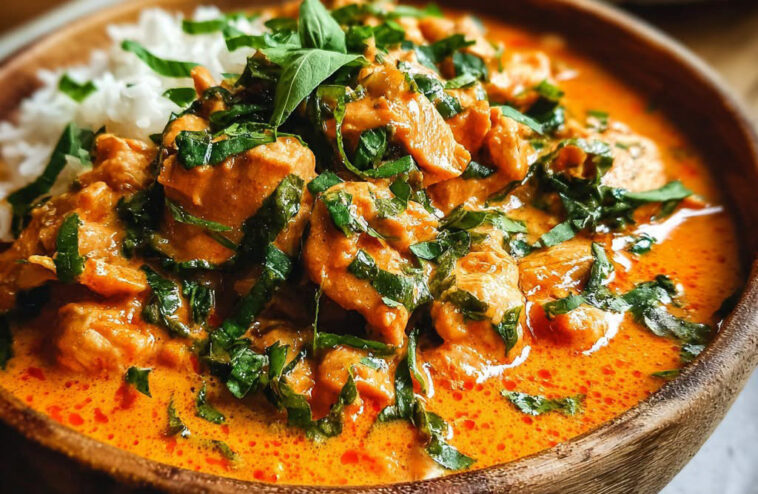
There is something irresistibly comforting about a warm bowl of Thai red curry. Tender pieces of chicken simmered in rich coconut milk, fragrant garlic and ginger, colorful vegetables, and aromatic Thai red curry paste come together to create a meal that feels both cozy and restaurant-worthy. This Creamy Thai Red Chicken Curry with Coconut Milk and Fresh Basil is an easy weeknight dinner that delivers plenty of flavor without requiring complicated techniques.
The creamy coconut sauce balances the gentle heat of red curry paste while brown sugar adds a subtle sweetness, fish sauce brings savory depth, and fresh lime juice brightens everything at the end. Red bell pepper, onion, and spinach add color, texture, and extra vegetables, while fresh basil gives the finished curry a fragrant herbal note.
Served over fluffy jasmine rice and finished with lime wedges, this Thai-inspired chicken curry makes a satisfying meal for the whole family.
Why You’ll Love This Thai Chicken Curry
This recipe is especially appealing because it combines simple ingredients with bold, layered flavors.
- Quick and easy: The entire meal comes together in about 30 minutes.
- Creamy and flavorful: Full-fat coconut milk creates a silky sauce with plenty of richness.
- Perfectly balanced: Sweet, salty, spicy, tangy, and savory flavors work together beautifully.
- Colorful and nutritious: Bell pepper, onion, spinach, and fresh herbs add freshness and texture.
- Flexible: You can easily adjust the spice level or substitute your favorite vegetables.
- Perfect for busy nights: Most of the preparation can be completed while the skillet heats.
Ingredients You’ll Need
Chicken
Use 1 pound of boneless, skinless chicken breasts, cut into small bite-sized pieces. Chicken breasts cook quickly and work particularly well in this recipe. For an even juicier result, boneless, skinless chicken thighs can also be used.
Olive Oil
A tablespoon of olive oil provides enough fat to sauté the chicken and aromatics without making the curry overly heavy.
Thai Red Curry Paste
Thai red curry paste is the foundation of the dish. It provides the characteristic spicy, aromatic flavor associated with Thai curries. Curry pastes vary in strength, so start with the recommended amount and add more if you prefer a hotter curry.
Fresh Ginger and Garlic
Freshly grated ginger and minced garlic add warmth and fragrance to the curry. They also help create a flavorful base before the coconut milk is added.
Red Bell Pepper
Thinly sliced red bell pepper contributes sweetness, color, and a slight crunch. It pairs particularly well with the creamy coconut sauce.
Yellow Onion
Thinly sliced yellow onion adds sweetness and savory depth as it cooks.
Full-Fat Coconut Milk
A 13.5-ounce can of full-fat coconut milk creates the rich, creamy foundation of the curry. Full-fat coconut milk is recommended because it produces a thicker and more luxurious sauce.
Brown Sugar
A tablespoon of brown sugar balances the heat of the curry paste and complements the natural sweetness of the coconut milk and vegetables.
Fish Sauce
Fish sauce contributes the deep salty, savory flavor that gives Thai-inspired dishes much of their characteristic complexity.
Fresh Lime Juice
Fresh lime juice is added near the end of cooking. Its acidity cuts through the richness of the coconut milk and makes the flavors taste brighter.
Fresh Spinach
A cup of fresh spinach adds color and vegetables to the curry. It wilts quickly when stirred into the hot sauce.
Fresh Basil
Fresh Thai basil is ideal, but regular basil works beautifully as well. Adding it after cooking helps preserve its fresh aroma.
To Serve
Prepare fluffy jasmine rice to serve underneath the curry. Fresh lime wedges make an excellent finishing touch.
How to Make Thai Red Chicken Curry
1. Prepare the Ingredients
Before turning on the stove, cut the chicken into evenly sized pieces and prepare the vegetables. Slice the red bell pepper and onion, mince the garlic, grate the ginger, and have the curry paste and coconut milk ready.
Because the curry cooks quickly, having everything prepared ahead of time makes the process much easier.
2. Brown the Chicken
Heat the olive oil in a large skillet over medium-high heat.
Add the bite-sized chicken pieces in an even layer. Cook for approximately 4 to 5 minutes, stirring occasionally, until the chicken develops light golden-brown edges.
The chicken does not need to be completely cooked at this stage because it will continue cooking in the curry sauce.
3. Add the Curry Paste, Ginger, and Garlic
Add the Thai red curry paste, freshly grated ginger, and minced garlic to the skillet.
Stir everything together and cook for approximately 1 to 2 minutes.
This short cooking step is important because it allows the curry paste, ginger, and garlic to become fragrant and helps develop a deeper flavor.
Be careful not to let the garlic burn.
4. Cook the Vegetables
Add the sliced red bell pepper and yellow onion.
Stir well so the vegetables become coated in the aromatic curry mixture. Cook for another 2 to 3 minutes, stirring occasionally.
The vegetables should begin to soften while still retaining some texture.
5. Add the Coconut Milk
Pour the full-fat coconut milk into the skillet.
Stir thoroughly, scraping the bottom of the pan if necessary to incorporate all of the flavorful curry paste and browned bits from the chicken.
The coconut milk will immediately transform the mixture into a creamy, fragrant curry sauce.
6. Balance the Sauce
Add the brown sugar and fish sauce.
Reduce the heat to medium-low and allow the curry to gently simmer for approximately 8 to 10 minutes.
During this time, the chicken will finish cooking while the coconut sauce thickens slightly.
Avoid boiling the curry aggressively. A gentle simmer helps keep the chicken tender and allows the sauce to develop a smooth consistency.
7. Add Lime Juice and Spinach
Once the chicken is cooked through and the sauce has thickened slightly, stir in the fresh lime juice.
Add the spinach and gently stir until it wilts into the hot curry. This usually takes only 1 to 2 minutes.
The lime juice adds a bright, tangy contrast to the rich coconut milk.
8. Finish with Fresh Basil
Remove the skillet from the heat and stir in the chopped fresh basil.
Adding the basil at the end helps preserve its delicate aroma and fresh flavor.
Taste the curry and adjust the seasoning if necessary. Depending on the curry paste and fish sauce you use, you may want a little more lime juice, fish sauce, or curry paste.
How to Serve Thai Red Chicken Curry
For the classic presentation, spoon the creamy chicken curry generously over freshly cooked jasmine rice.
Garnish with additional chopped basil and serve with fresh lime wedges on the side.
The rice absorbs the flavorful coconut curry sauce, making every bite rich and satisfying.
You can also serve the curry with steamed vegetables, cucumber salad, or a simple Thai-inspired side dish.
Tips for Making the Best Thai Red Curry
Don’t Overcook the Chicken
Chicken breast can become dry if cooked for too long. Cut the pieces into similar sizes so they cook evenly, and simmer them gently in the sauce until just cooked through.
Use Full-Fat Coconut Milk
Full-fat coconut milk provides the richest texture and helps create a creamy sauce. Light coconut milk can be used, but the finished curry will generally be thinner and less luxurious.
Adjust the Spice Level
Different brands of Thai red curry paste can vary considerably in heat.
For a milder curry, use a smaller amount of curry paste. If you enjoy more heat, increase the curry paste gradually or add a little sliced fresh chili.
Add the Lime at the End
Fresh lime juice is best added toward the end of cooking. This preserves its bright acidity and prevents the flavor from becoming dull.
Don’t Skip the Basil
Fresh basil adds an important aromatic element to the finished dish. Thai basil is especially delicious, but regular fresh basil is a convenient substitute.
Easy Variations
Thai Red Chicken Curry with Broccoli
Add small broccoli florets along with the bell pepper. They will soften as the curry simmers while adding extra texture.
Chicken and Mushroom Red Curry
Sliced mushrooms make a delicious addition. Add them with the bell pepper and onion and allow them to cook until tender.
Vegetable Thai Red Curry
Replace the chicken with a combination of vegetables such as zucchini, broccoli, mushrooms, carrots, bell peppers, and baby corn.
Thai Red Curry with Chicken Thighs
For especially tender and juicy meat, substitute boneless, skinless chicken thighs for the chicken breasts.
Extra-Spicy Thai Curry
If you enjoy a fiery curry, add extra red curry paste or a small amount of fresh chili. Add heat gradually so you can control the final spice level.
What to Serve with Thai Red Chicken Curry
Jasmine rice is the natural choice, but there are several other options.
Steamed rice: Simple white rice absorbs the creamy curry sauce beautifully.
Brown rice: A heartier option with a nutty flavor.
Coconut rice: Adds another layer of coconut flavor to the meal.
Rice noodles: A fun alternative when you want something different from traditional rice.
Steamed vegetables: Broccoli, green beans, or snap peas make excellent side dishes.
How to Store Leftovers
Allow leftover curry to cool slightly before transferring it to an airtight container.
Refrigerate for up to 3 days.
When reheating, warm the curry gently in a saucepan over medium-low heat, stirring occasionally. If the sauce has thickened too much in the refrigerator, add a small splash of water or coconut milk.
The curry can also be reheated in the microwave in short intervals, stirring between each interval until heated through.
Can You Freeze Thai Red Chicken Curry?
Yes, this curry can be frozen.
Allow it to cool completely before transferring it to a freezer-safe container. Leave a little space at the top for expansion.
Freeze for up to approximately 2 to 3 months for the best quality.
Thaw overnight in the refrigerator and reheat gently on the stovetop.
The texture of coconut-based sauces can sometimes change slightly after freezing and thawing, but gentle reheating and thorough stirring can help restore a smooth consistency.
Frequently Asked Questions
Is Thai red curry very spicy?
Thai red curry can range from mild to quite spicy depending on the curry paste used. Start with the recommended amount and adjust according to your preference.
Can I use chicken thighs instead of chicken breast?
Absolutely. Boneless, skinless chicken thighs are an excellent substitute and tend to remain especially juicy during cooking.
Can I use light coconut milk?
Yes, although full-fat coconut milk is recommended for the richest flavor and creamiest texture.
Can I substitute soy sauce for fish sauce?
If you don’t have fish sauce, soy sauce can be used as a substitute. The flavor will be slightly different, but the curry will still be delicious.
Can I make this curry dairy-free?
Yes. This recipe is naturally dairy-free as written, provided the curry paste and other packaged ingredients you use contain no dairy ingredients.
What kind of basil should I use?
Thai basil provides the most traditional flavor, but regular sweet basil is an excellent and widely available substitute.
Can I add more vegetables?
Definitely. Broccoli, mushrooms, zucchini, carrots, snap peas, baby corn, and green beans all work well in this curry.
Recipe at a Glance
Prep Time: 10 minutes
Cooking Time: 20 minutes
Total Time: 30 minutes
Servings: 4
Calories: Approximately 480 kcal per serving
Final Thoughts
This Creamy Thai Red Chicken Curry with Coconut Milk and Fresh Basil is a wonderful recipe to keep in your weeknight dinner rotation. It delivers the comforting richness of coconut milk, the aromatic warmth of ginger and garlic, the savory depth of fish sauce, and the bright freshness of lime and basil in one skillet.
The combination of tender chicken, colorful peppers, onions, spinach, and creamy red curry sauce makes every serving satisfying and flavorful. Best of all, the recipe comes together in just about 30 minutes, making it easy enough for a busy evening while still feeling special.
Serve it over fluffy jasmine rice, add a squeeze of fresh lime, scatter a little extra basil over the top, and enjoy a homemade Thai-inspired dinner packed with comforting flavor.
